
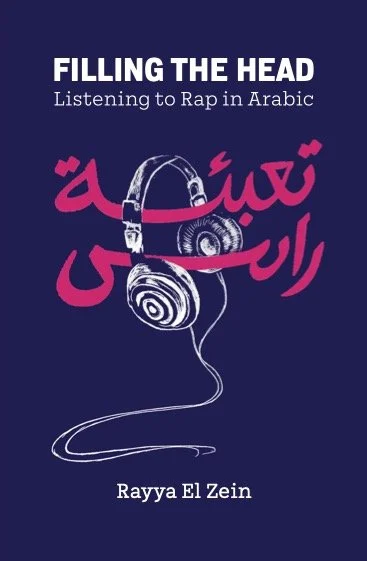
by Rayya El Zein
In Filling the Head: Listening to Rap in Arabic, ordinary motion and emotion are treated as political when spectacular political movements like protests, strikes, or revolutions feel far away, forced, or otherwise impossible. Threading reflections from fans, rappers, DJs, producers, and venue owners, El Zein offers new insights into what it means politically to be moved by music.
Filling the Head challenges existing narratives that equate rap with popular political resistance against oppressive regimes. El Zein explores the political promise in artists' refusal to confine their lyrical or musical experimentation to an ethos of resistance.
by jason b. crawford
Winner of the 2026 Lambda Literary Award for LGBTQ+ Poetry
jason b. crawford’s YEET! envisions the Black community lifted off the earth and set free towards the stars.
These poems ask what a free Black people would look like and how we might achieve such a thing. YEET! presents a new take on Afrofuturism and utopianism. Rather than looking to a future of technological change, it steps years ahead to show how people are happier once they are no longer owned.
Speaking to racism, gun violence, colonisation, global warming, flight, joy, friendship, and noise, YEET! is about creating new worlds free from the systems of supremacy that have plagued us.
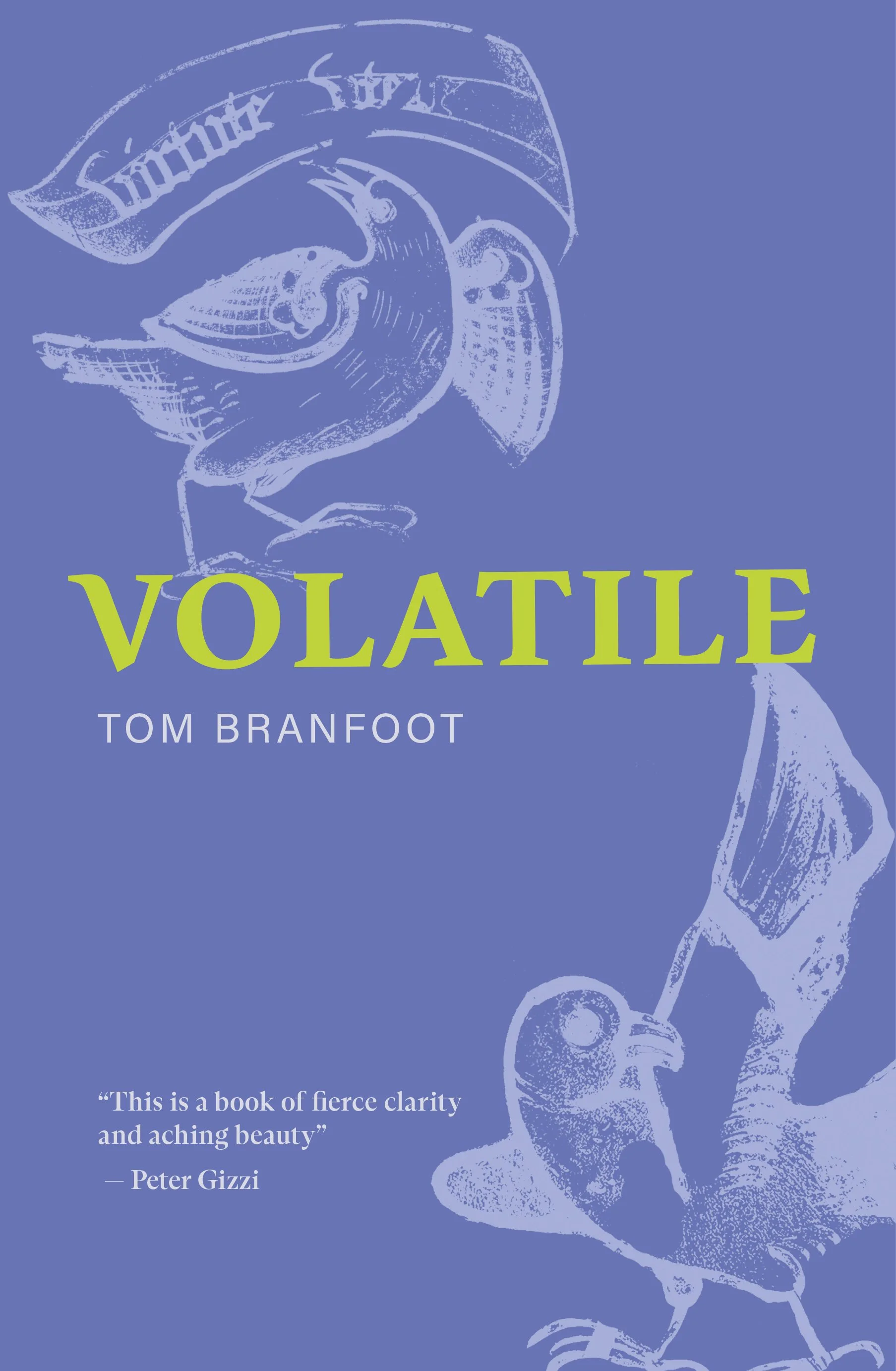
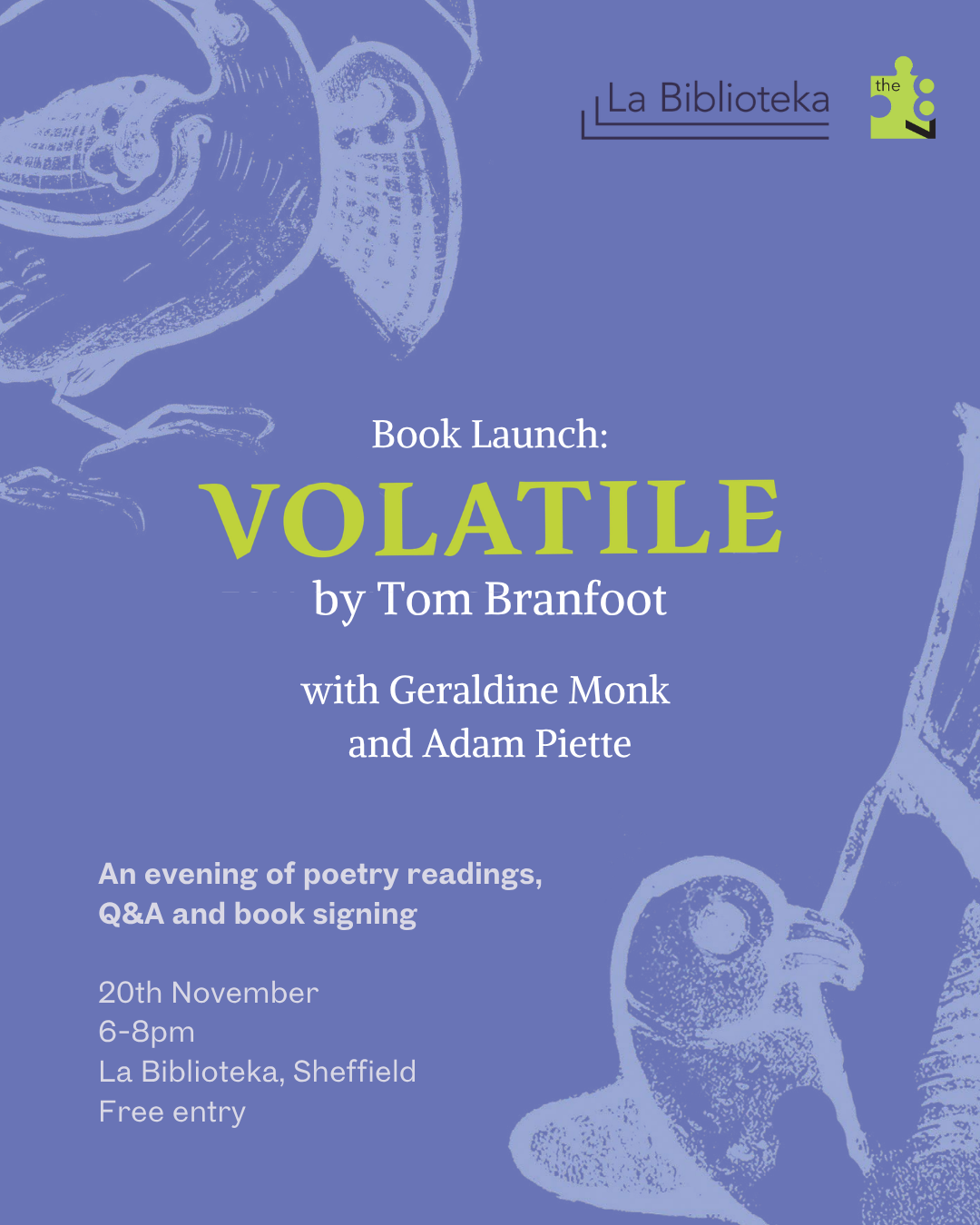
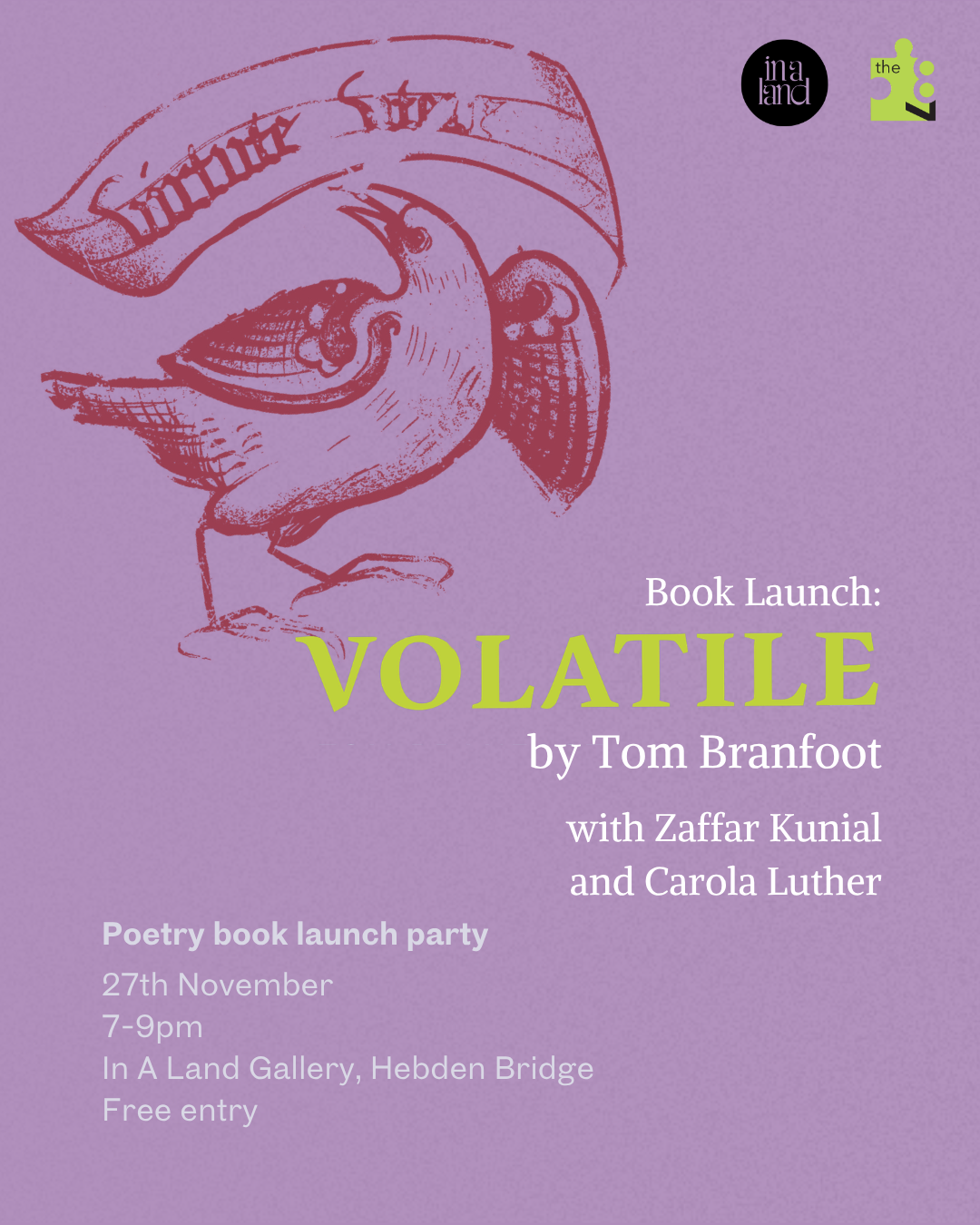
by Tom Branfoot
Tom Branfoot’s debut poetry collection explores nature during a time of political crisis, drawing its title from the Middle English use of ‘volatile’ to name birds and other winged creatures. Pulling apart what it means to dwell, habitat loss appears synonymous with eviction, and birds become fellow travellers in our precarious present. Produced as a part of a residency at Manchester Cathedral, the long poem "Muminent" is threaded throughout the book engaging with the earliest recorded history of Manchester to consider the body as an archive at risk of disappearance.
Featuring the Forward Prize for Best Single Poem shortlisted “A Parliament of Jets”, these complex, formally daring poems are concerned with the entanglements between personhood, global catastrophes, and ecosystems. These poems swoop between the unpredictable relationship between a son and their alcoholic parent, fighter jets soaring over the Lake District, and the mercurial rustle between memory and truth when childhood is stored in waterlogged pastures.
Volatile reaches out in solidarity to the dispossessed everywhere who still sing in the wreckage of the now.
by Tracy Fuad
Winner of the Phoenix Emerging Poets’ Prize
Tracy Fuad’s second collection of poems, PORTAL, probes the fraught experience of bringing a new life into a world that is both lush and filled with gloom. A baby is born in a brutalist building; the planet shrinks under the new logic of contagion; roses washed up from a shipwreck centuries ago are blooming up and down the cape.
PORTAL documents a life that is mediated, even at its most intimate moments, by flattening interfaces of technology and in which language—and even intelligence—is no longer produced only by humans.
The voices here are stalked by eco-grief and loneliness, but they also brim with song and ecstasy, reveling in the strangeness of contemporary life while grieving losses that cannot be restored. Through Fuad’s frank, honest poetry, PORTAL vibrates with pleasure and dread.
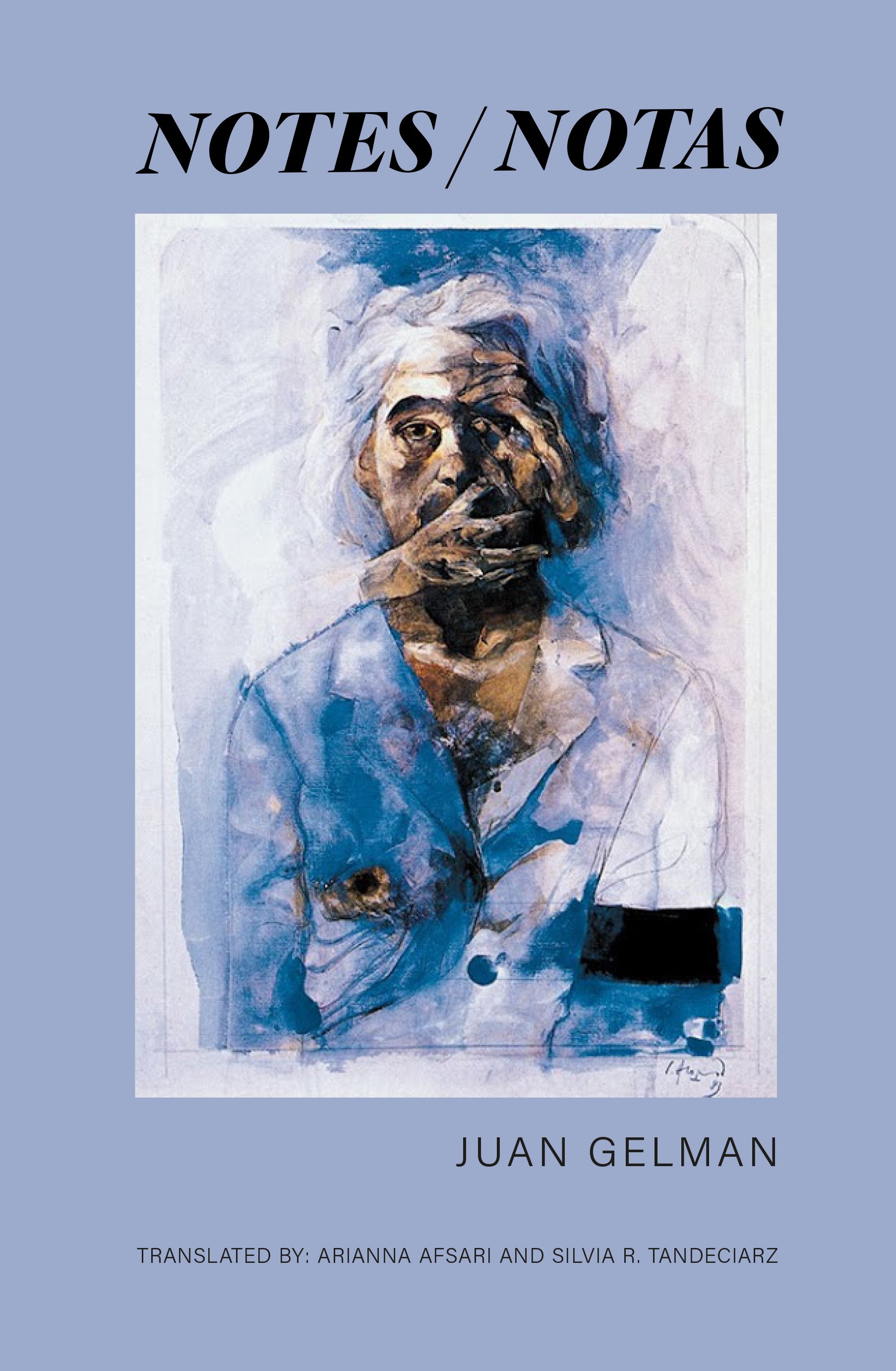
by Juan Gelman
translated by Arianna Afsari and Silvia Tandeciarz
Poetry Book Society Translation Choice 2026
'One of the greatest poets the world has today.' —José Saramago, Winner of the 1998 Nobel Prize in Literature
This bilingual edition makes Juan Gelman’s hauntingly beautiful poetry collection, Notes / Notas, available to English-speaking audiences in its entirety for the first time.
Originally published in 1979, Notas / Notes was composed in exile, following the 1976 military coup d'etat in Argentina. This period of state terrorism resulted in the disappearance of writers, comrades, and Gelman’s own son.
With a deep appreciation for Gelman’s masterful linguistic play, translators Afsari and Tandeciarz channel the force of his poetic testimony against the real violence of dictatorship.
Interweaving reflections on revolution, loss and memory, Argentina’s poet laureate conjures forth a sense of hope in the wake of inconceivable suffering.
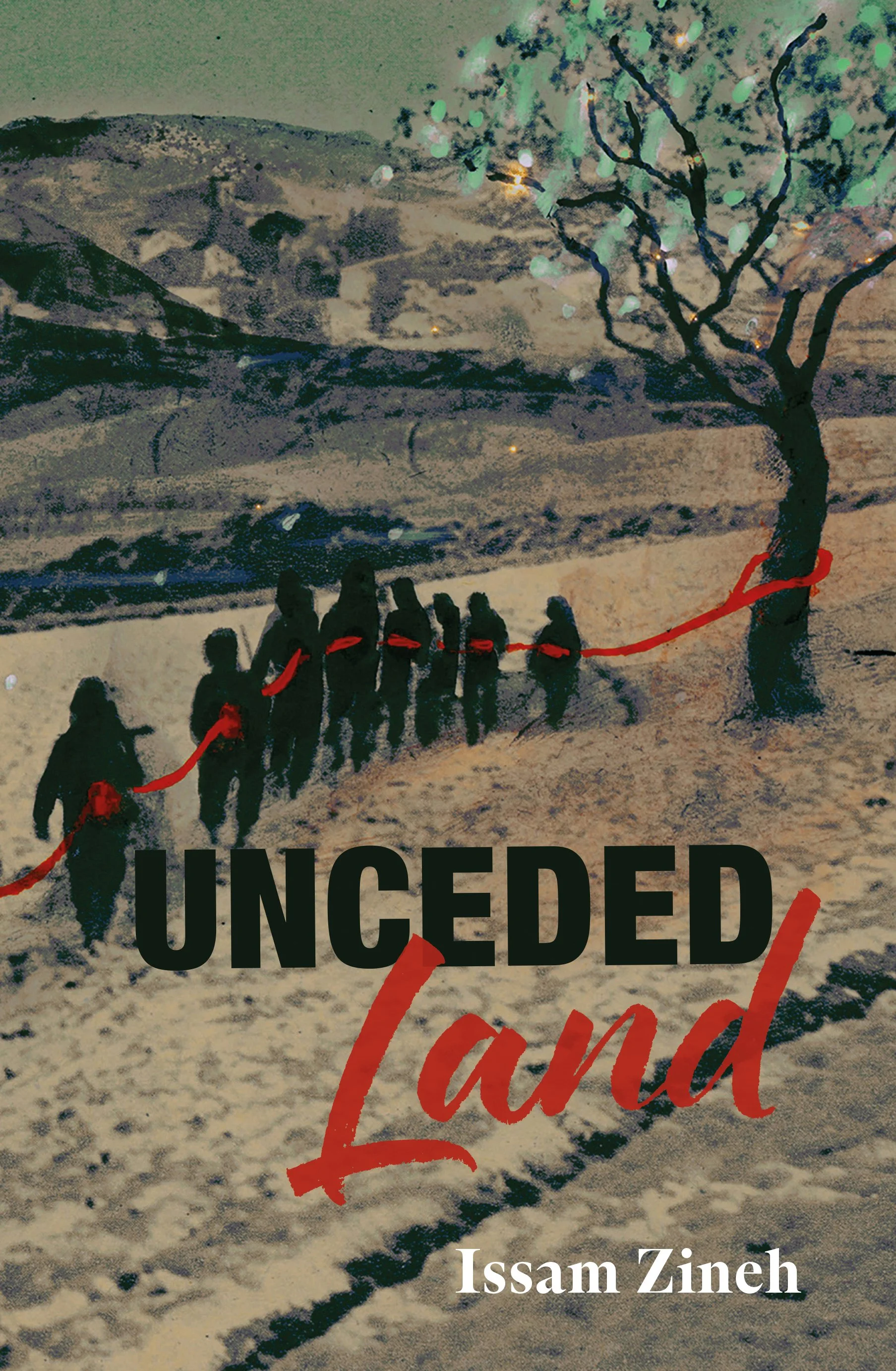
by Issam Zineh
Issam Zineh’s debut poetry collection Unceded Land traces the lines of intimacy, loss, and colonial legacies. Zineh unearths psychological depths and interrogates geographical territories, bridging the gap between the mind and the world, the personal and the political, the poem and the reader. Here is the poetry of unknotted affect, of landscapes as primordial as they are crushed by history, of perception rooted in diasporic experience.
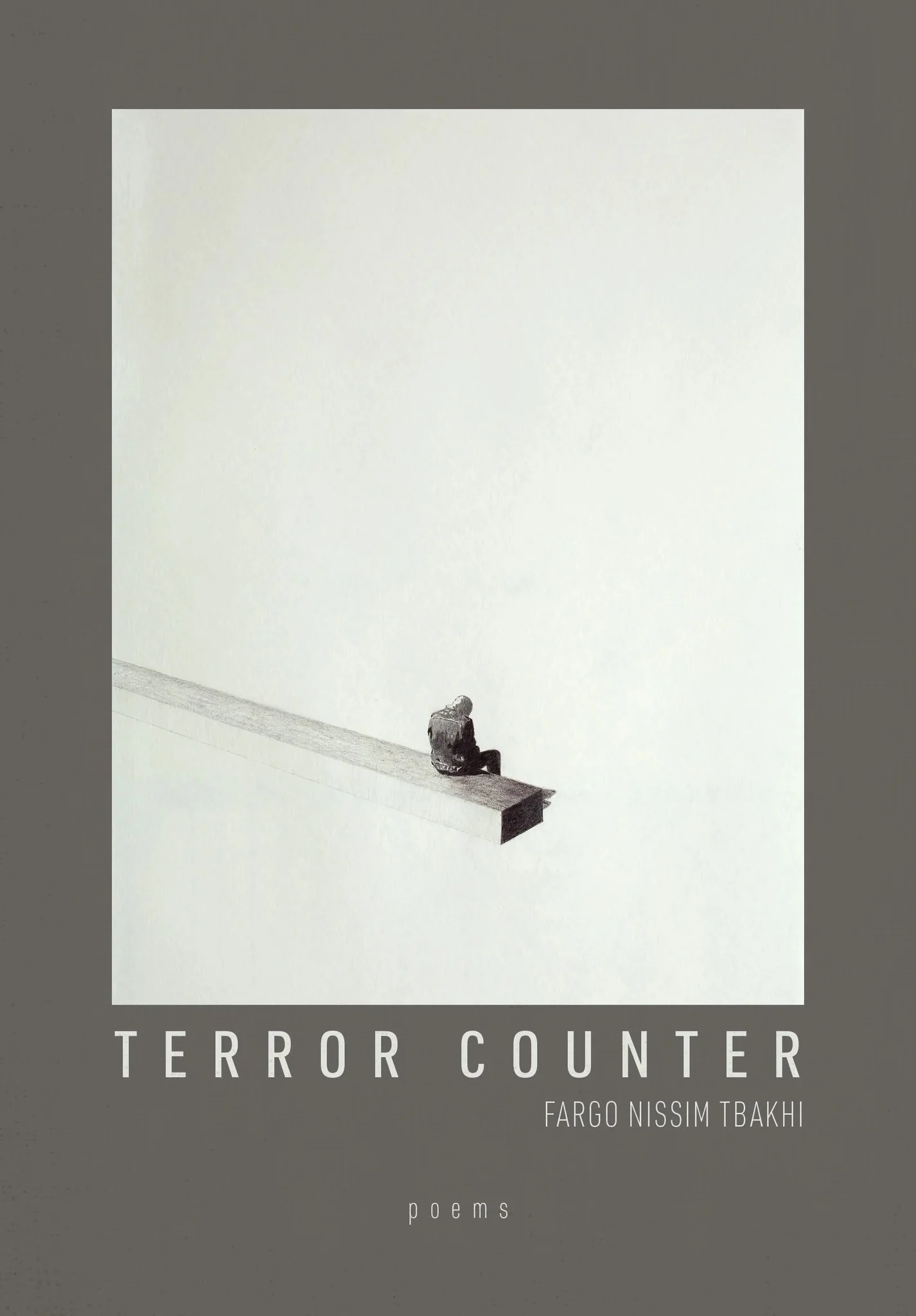
by Fargo Nissim Tbakhi
Moving through sections of varying experimentalism, from an invented visual form (the Gazan Tunnel) to all-caps queer ecstatic, Fargo Nissim Tbakhi here attempts to carve out a space for the negotiation of an alternative subjecthood.
The voices in this collection are driven by despair, futility, utopia, vulnerability and the spirit of a collective liberation; they move in search of a lyrical voice which can inhabit both the paranoid preservationist mode that facilitates Palestinian survival, and the imaginative possibilities that might make possible Palestinian life.
TERROR COUNTER asks: where and how might a Palestinian subject escape the public consumption of American letters? And, ultimately, how can we continue to love each other amidst the endless terror of the colonial world?
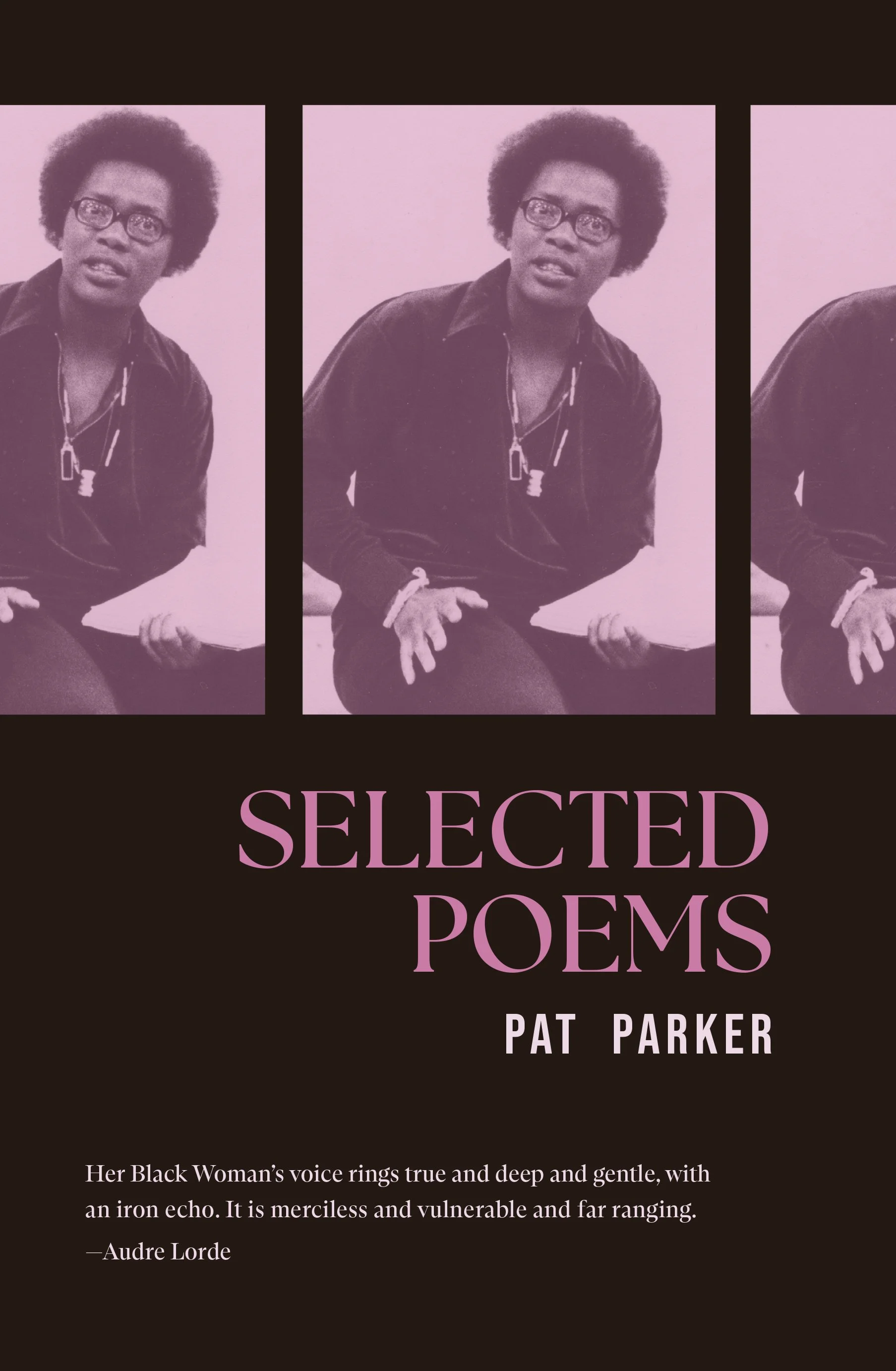
by Pat Parker
Edited by SaraEllen Strongman
'Her Black Woman’s voice rings true and deep and gentle, with an iron echo. It is merciless and vulnerable and far ranging.' —Audre Lorde
Alongside her invaluable contributions to social justice, Pat Parker (1944-1989) wrote five collections of poetry during her lifetime and is widely recognised as one of the leading African-American, lesbian-feminist voices of the 20th Century.
Selected Poems collects her most loved works into an accessible volume, introducing new readers to Parker's fire for justice, tenderness, and vision for the world.
This is the first time Pat Parker's poetry has been published in the United Kingdom.
Readers interested in Pat Parker’s life may also enjoy The Letters of Audre Lorde and Pat Parker 1974–1989, an archival work documenting their intimate friendship and important work as activist-poets.
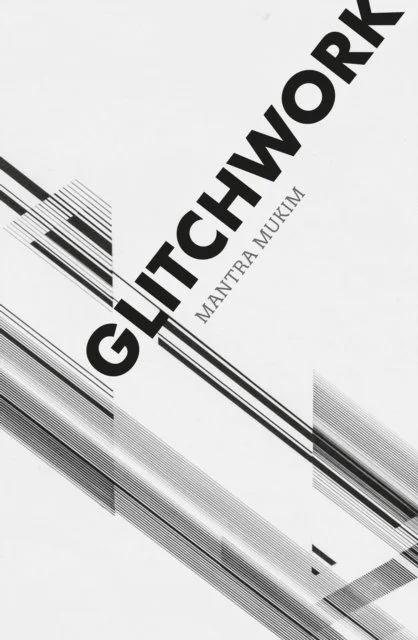
by Mantra Mukim
Glitchwork tracks the uneven lineages of Central India, building on modernist legacies and reckoning with the spectres of the 1984 Bhopal disaster. Mantra Mukim’s debut poetry collection is situated in a timeless, forested grid, poised on the verge of industrial erasure. This grid, a restless site of extraction and production, also brims with potential for lushness, fey ambience, and petite clearings.
Its three long poems consist of fragments on a mysterious Cold War ‘plant’, remixes of Surdas (the medieval-Braj poet), notes on palaeolithic hands, philology of the line, anomalies in a lunar-roving vehicle, and the origin myths of Raipur.

by Annie Wenstrup
Whiting Award Winner in Poetry 2025
Long-listed for the (Forward) Jerwood Prize for Best First Collection 2026
Finalist for the Poetry Society of America's Four Quartets Prize 2026
This extraordinary debut poetry collection by Dena'ina poet Annie Wenstrup delicately parses personal history in the space of an imagined museum. Outside the museum, Ggugguyni (the Dena'ina Raven) and The Museum Curator collect discarded French fries, earrings, and secrets—or as the curator explains, together they curate moments of cataclysm. Inside the museum, their collection is displayed in installations that depict the imagined Indigenous body. Into this "distance between the learning and the telling," Wenstrup inserts The Curator and her sukdu'a, her own interpretive text. At the heart of the sukdu'a is the desire to find a form that allows the speaker's story to be heard.
Through love letters, received forms, and found text, the poems reclaim their right to interpret, reinvent, and even disregard artifacts of their own mythos. Meticulously refined and delicately crafted, they encourage the reader to "decide/who you must become."
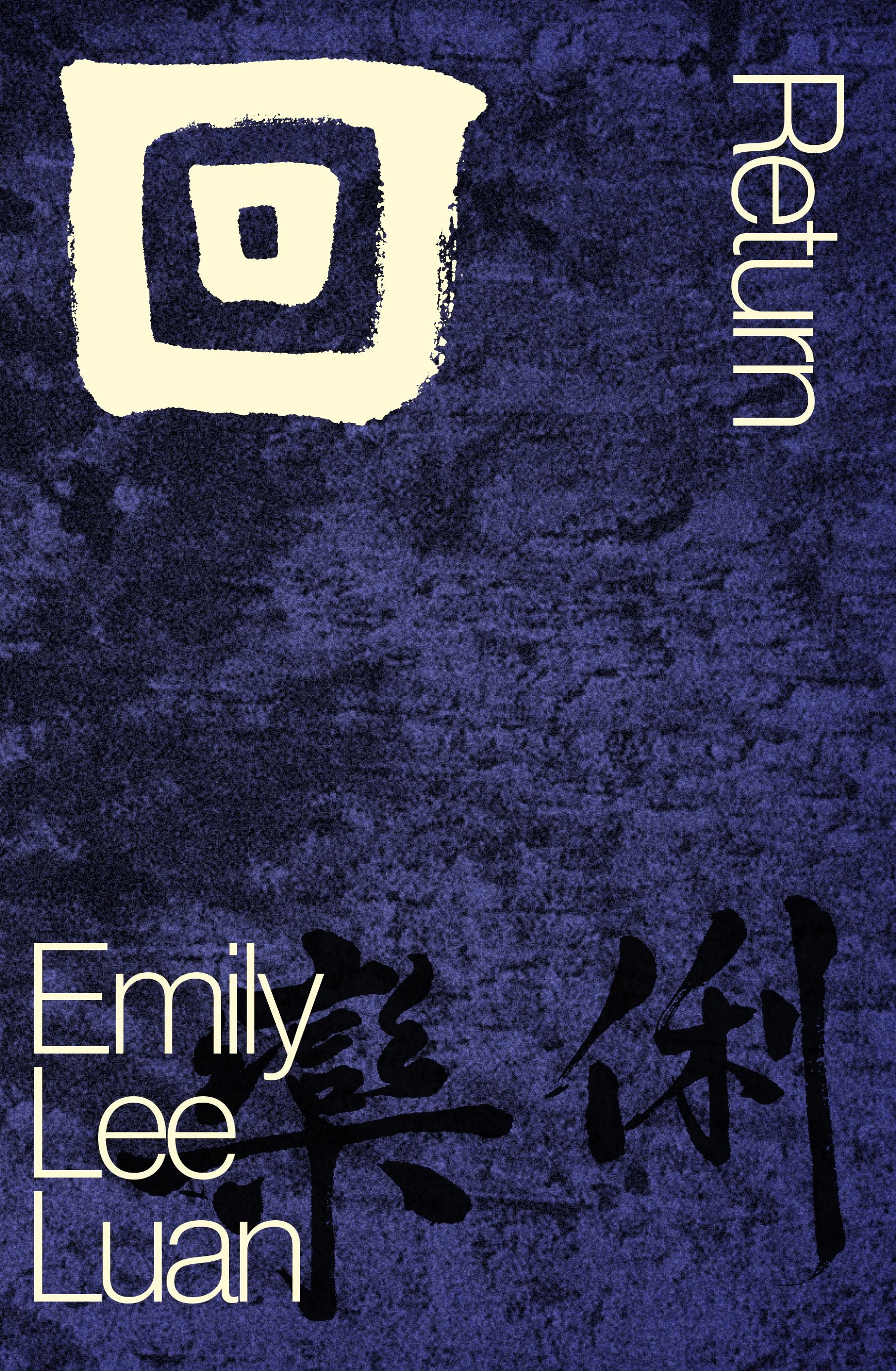
by Emily Lee Luan
Rooted in the classical tradition of the Chinese “reversible” poem, 回 / Return is engaged in the act of looking back—toward an imagined homeland and a childhood of suburban longing, through migratory passages, departures, and etymologies, and into the various holes and voids that appear in the telling and retelling of history. The poems ask: What is feeling? What is melancholy? Can language translate either?

Issue 1 - Spring/Summer 2026
A collaboration with the Open Library of Humanities.
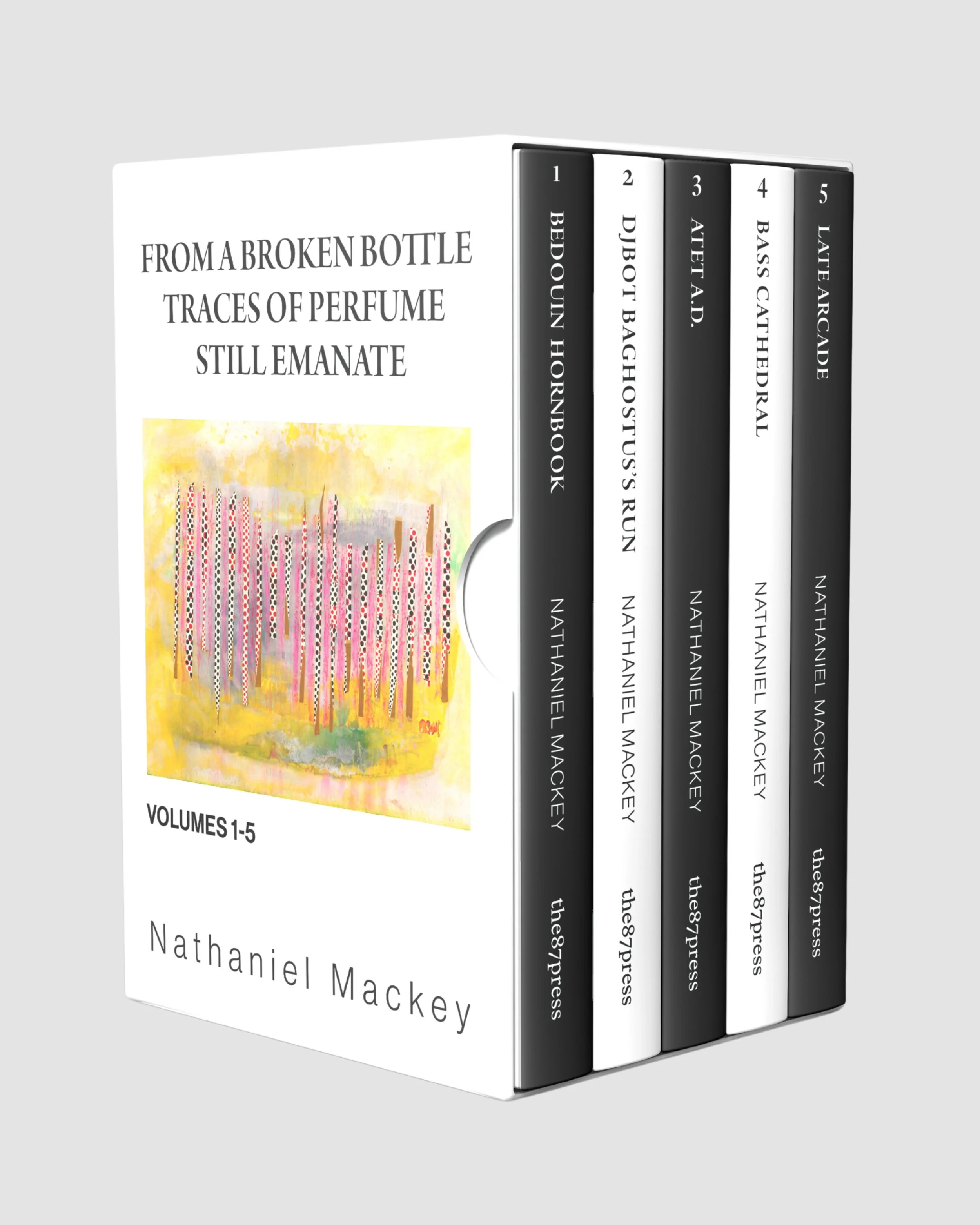
by Nathaniel Mackey
From a Broken Bottle Traces of Perfume Still Emanate explores music, philosophy, myth, erotics, and sociality in a rich and innovative patchwork of dreams, discourse, and everyday life.
Mackey’s epic quintet is an epistolary novel that unfolds through N.’s intimate letters to the mysterious Angel of Dust. Unexpected events and profound happenings occur as N. delves into the goings-on of his transmorphic Los Angeles-based jazz ensemble, in which he is a composer and multi-instrumentalist.
The story opens in July 1978 with a dream of a haunting Archie Shepp solo and a disassembled bass clarinet, and closes in June 1984 with a disconcertingly positive review of the ensemble’s first album Orphic Bend.
Unlike anything written today, From a Broken Bottle Traces of Perfume Still Emanate collects the full five installments—Bedouin Hornbook, Djbot Baghostus’s Run, Atet A.D., Bass Cathedral, and Late Arcade—of Nathaniel Mackey’s genre-defying work of serial fiction, which layers realism and myth through jazz-infused prose.
Box set includes five paperbacks (containing accompanying discographies) + two insert cards containing the first two letters Mackey wrote to the Angel of Dust, alongside his digital signature.